
Because of their open surroundings and great worth of tools and resources present on-site, construction sites are often targets for theft and vandalism. The growing tendency of using Security Drones for security has changed the way these facilities are guarded and watched over. Though still helpful, conventional security methods such as fences, guards, and surveillance cameras usually fail to discourage planned criminal activities. Increasingly used for security of building areas, Security Drones provide a dynamic, mobile, and effective answer to this problem.
Vandalism and Theft at Building Sites: The Issue
Every year all around, theft and vandalism at building sites cause losses of billions of dollars. Priority targets are tools, heavy gear, copper wiring, building materials and lumber. These crimes jeopardize worker safety and boost insurance costs in addition to postponing project schedules. Unauthorized access and acts of vandalism can also result in structural damage or less immediately apparent concerns. Faster reaction systems and improved surveillance are thus desperately needed.
Restrictions on Conventional Security Measures
While they offer some degree of security, conventional techniques include hiring security guards, setting up stationary cameras, and building obstacles that have clear limits. Human guards can only cover small regions at once and may overlook important events because of tiredness or poor vision over wide areas. Although they are good for recording, stationary cameras have blind areas and cannot discourage theft unless closely watched. Moreover, against determined burglars, building and maintaining physical barriers like fences and lighting can be costly and inefficient. These constraints have produced a security gap that modern technology—especially drones—is increasingly filling.
How Drones Are Improving Site Safety in Construction
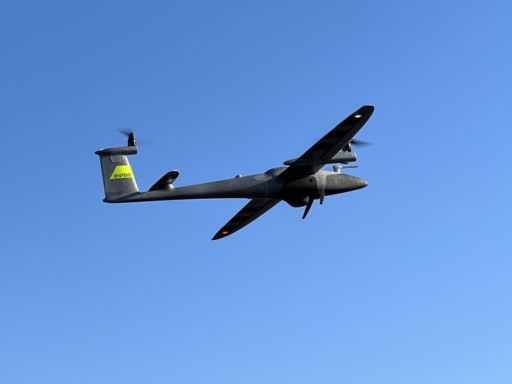
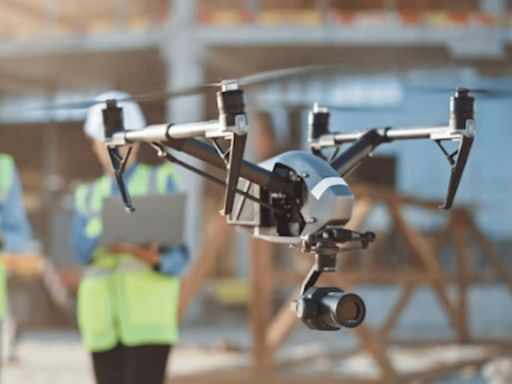
Real-time aerial surveillance provided by drones covers vast distances fast and effectively. Equipped with GPS tracking, infrared sensors, and high-resolution cameras, drones can monitor building sites from the air, offering complete control not possible with more conventional means. These unmanned aerial vehicles (UAVs) guarantee continuous surveillance by flying over a facility several times a day or by being launched right away upon motion detected after hours.
Among the main advantages of drones are their mobility. Drones can negotiate difficult-to-reach locations and modify their flight patterns depending on site-specific needs unlike fixed cameras. Offering both regular monitoring and responsive surveillance, they can be taught to follow particular paths or respond to ground sensor alarms.
Deterrence via presence and visibility
Simply the obvious presence of drones can discourage possible invaders. Clearly under aerial surveillance sites are less likely targets for would-be vandals or thieves. Knowing that drones can track movements, record video evidence, and instantly notify police causes criminals psychological barriers.
Additionally fitted with flashing lights and loudspeakers to provide warnings, drones can help to further discourage illegal access. One of the most effective weapons in stopping crimes before they start is the capacity to create live announcements or alerts in reaction to sensed movement.
Advanced Characteristics Driving Drone Effectiveness
Modern security drones have sophisticated tools meant for surveillance chores. Effective even in complete darkness, night vision and thermal imaging let them find heat signals. This is particularly helpful in seeing attackers moving stealthily at night or behind objects.
Certain drones have artificial intelligence sensors that let them distinguish between authorized workers, animals, and suspected activity. This guarantees that attention is just focused on real hazards and helps to lower false alerts. Certain systems allow drones to interact with ground-based security systems including motion detectors and alarms, therefore building a complete security network that functions harmonically.
Real-time transmission to security command centers also allows quick response—that is, either law enforcement notification or a security team deployment. Minimizing damage and loss depends on this speedy reaction time.
Remote observation and data collecting
Remote surveillance of building sites made possible by drones provides live video feeds from anywhere in the globe, therefore providing project managers, security personnel, and stakeholders access. Large construction firms running several sites or projects in remote or high-risk areas will especially find this helpful.
Apart from security, drones gather priceless information that might be utilized to evaluate security flaws, examine trends of activity, and enhance general site management. Better resource allocation and preventive actions are made possible by the understanding of when and where incidents most likely to arise made possible by the collected footage and sensor data over time.
Cooperation With Current Security Systems
While they are not stand-alone fixes, drones are quite successful when combined with current security systems. Combining drones with access control systems, motion detectors, and CCTV improves the whole security scene. When a motion detection sets off, for example, a drone can be sent automatically to probe and provide live pictures back to the monitoring station.
Integration also lessens the need for human involvement and lets one automate. Coordinated response systems, smart alarms, and automated patrol paths simplify security operations and help to lighten the workload for human employees.
ROI and Cost Efficiency
Even if drone technology's initial outlay seems expensive, over time it usually results in notable savings. Drones assist prevent expensive theft or damage-related delays, save insurance rates, and lessen the need for many security guards. Moreover, the gathered data provides value beyond only security by means of productivity analysis and planning.
For many building companies, lower losses, better project schedules, and less security events rapidly show the return on investment. Drone technology is becoming more common and its prices are also lowering, which opens a wider spectrum of building projects possible.
Regulatory Considerations and Compliance
Using drones for security needs does carry legal obligations. Depending on the site, operators could have to follow particular aviation rules including data privacy legislation, licensing, and flying height limitations. To prevent legal problems, drone use should be consistent with national and local policies.
Several countries mandate adherence to no-fly zones, registration of drones, and certification of operators. To keep legal compliance and confidence, construction firms also have to be open with staff members and the public regarding monitoring policies.
Safety and Environmental Advantage
Additionally helping with worker safety and environmental impact are drones. Drones can assist cut on-site energy use by lowering the demand for too strong nighttime lighting. Early identification of dangerous events including gas leaks, structural flaws, or illegal visitors into sensitive regions is made possible by their aerial perspective.
Maintaining the integrity of the site also depends on observing environmental factors as soil erosion, water, or wind damage. By means of this proactive strategy, expensive safety infractions are minimized and worker dangers are lowered.
Drone Use's Difficulties and Restraints
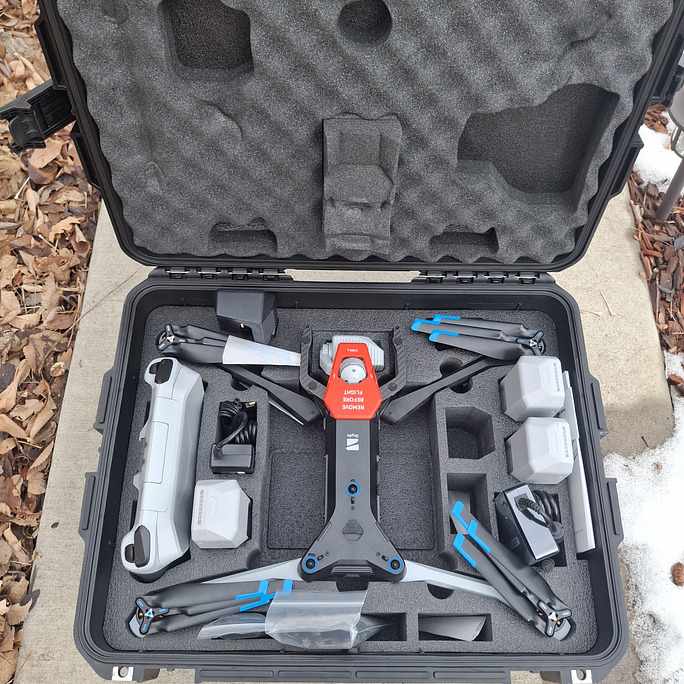
Drones provide difficulties even with their benefits. Each flight's length is limited by battery life, which calls for either regular charging or battery replacements. Drone operations could be hampered by weather including rain, strong gusts, or extreme temperatures. Furthermore, improper security for drone systems could expose them to signal interference or hacking.
Another logistical issue is keeping trained drone operators current. Although automation helps, human supervision is still required to guarantee drones run as expected and react effectively to changing conditions.
Prospective Developments in Drone-Based Safety
With continuous developments in artificial intelligence, automation, and drone swarming technologies, drone-based construction security appears to have bright future. More autonomous, able to make decisions in real-time and coordinate with other drones and equipment on-site, drones will become.
Faster data transfer and real-time control made possible by 5G connectivity will help drone surveillance to be even more responsive. Next-generation drones will provide longer and more robust surveillance capability with improved battery life and weather resistance.
By improving threat detection accuracy, machine learning techniques will help to lower false alarms and increase security results. Integration with other developing technologies including IoT sensors, augmented reality, and predictive analytics will produce a completely linked security environment changing with every project.
Finally,
Including drones into building site security is altering how businesses safeguard their assets, employees, and project schedules. Drones close a significant need left by conventional security systems by providing real-time observation, sophisticated detecting tools, and fast reaction. Drone use will become routine in the building sector as technology develops, therefore improving safety, efficiency, and peace of mind. Those building enterprises who adopt this idea will not only discourage vandalism and theft more successfully but also develop a competitive edge in a market growingly competitive.


Write a comment ...